
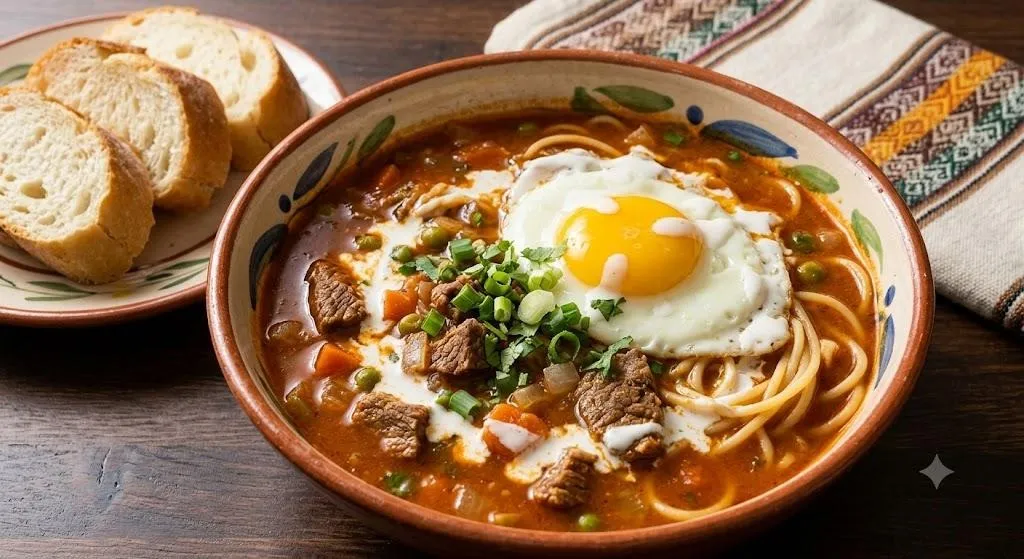
Some soups are made to impress. Others are made to take care of you. Sopa criolla belongs to the second group. It is a bowl of beef, thin noodles, tomato and chili, finished with a splash of milk and a soft egg, and it has been comforting Peruvian families for generations.
If you have never heard of it, you are not alone. Peruvian food is often introduced through ceviche and lomo saltado, and the home-style dishes get less attention. That is a shame, because sopa criolla shows how Peruvian cooks think: build flavor slowly, use a few strong ingredients, and make sure the bowl feels like a hug.
This article walks through what sopa criolla is, where the name comes from, what makes it taste the way it does, and how to cook it at home without stress.
What Is Sopa Criolla?
Sopa criolla (SOH-pah kree-OH-yah) is a Peruvian beef and noodle soup. The base is a sofrito of onion, garlic, tomato and a dark red chili called aji panca. Small pieces of beef are cooked in the broth, then thin angel hair noodles go in near the end. Just before serving, a little evaporated milk is stirred through the soup, and each bowl gets an egg on top.
The result is a soup that is savory, a little sweet, mildly spicy and slightly creamy, all at once. It is not heavy like a stew and not thin like a plain broth. It sits somewhere in the middle, which is why people love it for lunch, dinner, or a late-night meal.
You will find versions of it in home kitchens, small family restaurants and market stalls across Peru. Every cook has small habits. Some add a few cubes of yellow potato. Some use ground beef instead of sliced steak. Some fry the egg, and some drop it straight into the pot. The core stays the same.
Why Is It Called “Criolla”?
In Peru, the word criollo describes things that grew out of a mix of cultures, mostly Spanish, Indigenous and African, and later Chinese, Italian and Japanese too. Criolla food is Peruvian home cooking that blends those influences into something new.
Sopa criolla fits that idea well. Noodles and milk came into Peruvian kitchens through European and later global trade. The chilies, the way of building flavor, and the habit of eating it as a restorative meal are local. Put together, they make a soup that nobody could mistake for any other country’s.
Many Peruvians also see it as a soup for tired days. It is often eaten late at night or the morning after a long party, because the warm broth, protein and carbs feel restoring. Whether or not that is science, the comfort is real.
What Goes Into the Pot
The ingredient list is short, but each item has a clear job.
Beef. Thin pieces of tender beef brown quickly and give the broth its savory base. Browning matters. Those golden bits on the bottom of the pot are where much of the flavor comes from.
Onion and garlic. These cook down first and add sweetness and depth. The onion should be soft before anything else goes in.
Tomato. Fresh tomato adds a gentle sourness, and a spoonful of tomato paste makes the base richer and darker.
Oregano and cumin. Both are used lightly. Oregano brings a herbal note, and cumin adds warmth. You should taste them as a background, not as the main flavor.
Thin noodles. Angel hair, also sold as fideos cabello de angel, cooks in a few minutes and gives the soup a soft, comforting texture.
Evaporated milk and egg. These two finish the soup. The milk smooths the edges of the broth, and the egg adds richness.
The Role of Aji Panca
If one ingredient defines sopa criolla, it is aji panca. This Peruvian chili is deep red, mild in heat, and slightly sweet and smoky. It gives the soup its color and its character without making it spicy.
Outside Peru, aji panca is easiest to find as a paste in jars, or as dried chilies. Some home cooks make their own paste, which tastes brighter and costs less. If you want to try that, this guide to making aji panca paste at home walks through it step by step.
The key is to cook the paste with the onion, garlic and tomato for a few minutes before any liquid goes in. Raw chili paste tastes flat. Cooked chili paste tastes warm and round. This one small step changes the soup more than any other.
How to Make Sopa Criolla at Home
You do not need special tools or advanced skills. The method is simple, and the whole soup takes about an hour.
- Brown the beef. Cut about 400 g of tender beef into small, thin pieces. Season with salt and pepper, and brown it in a hot pot with a little oil. Take it out and set it aside.
- Build the base. In the same pot, cook one chopped red onion until soft, then add three cloves of garlic for about 30 seconds.
- Add the flavor. Stir in two tablespoons of aji panca paste, a chopped tomato, a spoonful of tomato paste, oregano and cumin. Cook for 3 to 5 minutes.
- Simmer. Return the beef, pour in about 1.25 liters of beef broth, and simmer for 10 minutes.
- Add the noodles. Drop in about 150 g of angel hair noodles and cook until just tender.
- Finish with milk. Lower the heat and stir in half a cup of evaporated milk. Heat it gently for a minute or two. Do not let it boil hard.
- Add the egg. Fry one egg per person, or crack the eggs into the simmering soup and let them poach.
These quantities make about four servings. If you want exact amounts, photos for each step, and answers to common questions, you can read the full Sopa Criolla recipe with a complete ingredient list.
Common Mistakes to Avoid
A few small habits can make the difference between a good soup and a great one.
Skipping the browning. If you drop raw beef straight into the broth, the soup tastes flat. Take the extra five minutes to brown it.
Rushing the base. The onion, tomato and chili need time together. If you pour in the broth too early, you lose the deep flavor.
Overcooking the noodles. Thin noodles go soft fast, and they keep soaking up broth after the heat is off. Add them last and serve right away.
Boiling the milk. High heat can make evaporated milk look grainy. Keep the pot on low once the milk goes in.
Forgetting to taste. Beef broth can be very salty or very mild depending on the brand. Always taste before the final seasoning.
Ways to Make It Your Own
Once you know the basic version, small changes can suit your taste.
- Add heat. A spoonful of aji amarillo paste gives a brighter, hotter flavor.
- Make it heartier. A few small cubes of yellow potato turn the soup into a fuller meal.
- Use another protein. Ground beef works well when you are short on time. Chicken is a lighter option, though beef is the classic choice.
- Change the egg. A fried egg gives crispy edges. A poached egg makes the broth richer.
- Add bread. Toasted or fried bread on the side is very common and perfect for dipping.
Serving and Storing
Sopa criolla tastes best right after it is made, with the noodles still tender and the egg warm. Serve it in deep bowls with toasted bread on the side.
If you want to cook ahead, make the beef base and broth first, and store it in the fridge. When you are ready to eat, reheat it, then add fresh noodles, milk and eggs. This keeps the noodles from turning mushy. Leftover soup keeps in the fridge for a few days, though the noodles will soften. For longer storage, freeze only the beef base and leave out the noodles, milk and eggs.
Final Thoughts
Sopa criolla is not a fancy dish, and that is exactly why it works. It uses ingredients most kitchens can find, a few honest cooking steps, and one special chili that gives it a Peruvian soul. If you are curious about Peruvian food beyond the famous dishes, this soup is a good place to start. Make it on a cool evening, serve it hot, and let the egg yolk melt into the broth.
About the author: Anna Rehman is a home cook and food writer behind Peruvian Spice, where she shares traditional Peruvian recipes, practical cooking tips and stories about Peru’s food culture.
